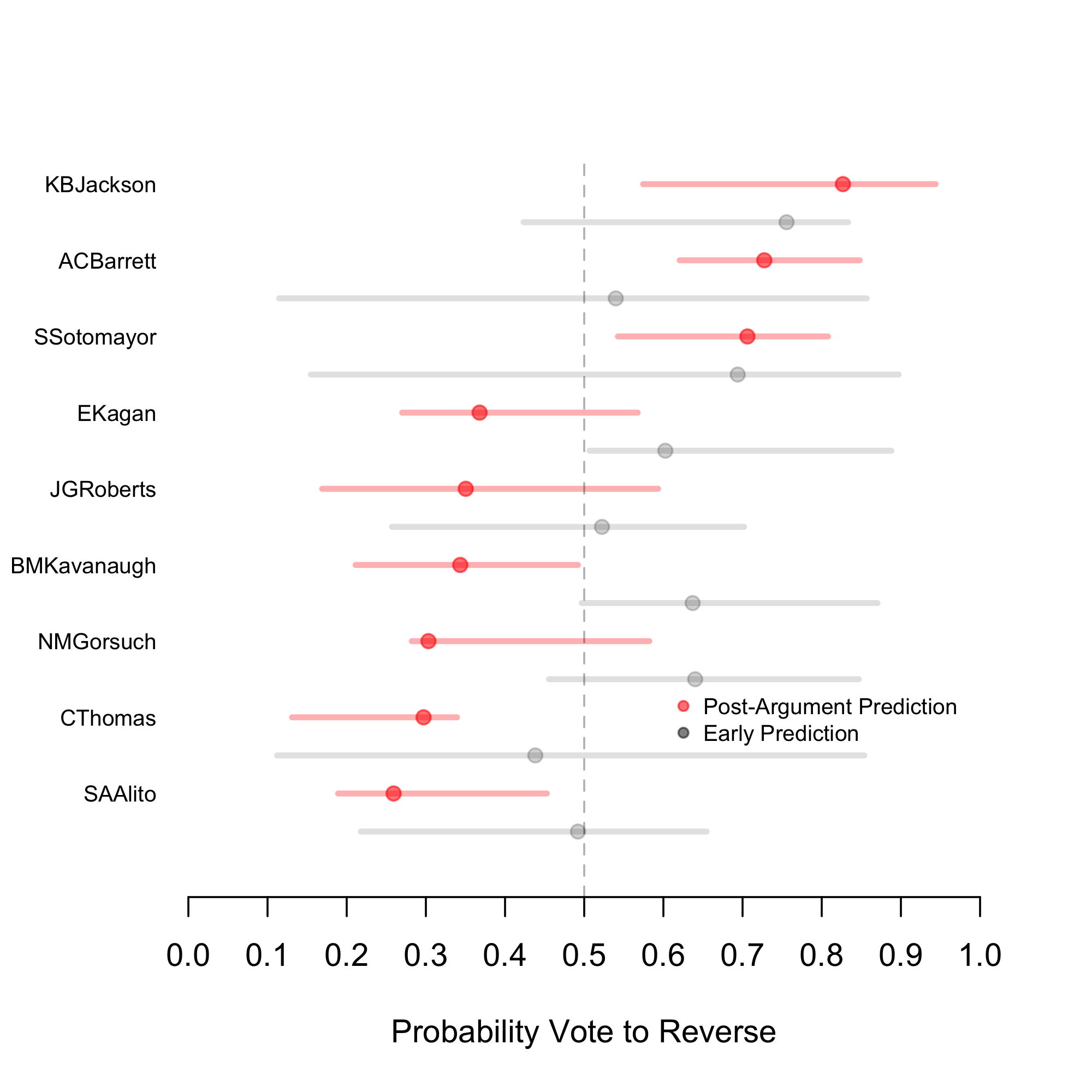
This is another compassionate release case, like Rutherford discussed earlier. The question in Fernandez, though, is whether claims about the weakness of the evidence against the defendant can count as “extraordinary and compelling” reasons for compassionate release—after direct appeals on those bases failed. Or to put it more starkly, can a claim of innocence count as an extraordinary and compelling reason after you’ve been convicted?
The district court ordered early release on these grounds. And the Second Circuit reversed. Fernandez now appeals to the Supreme Court.
Most justices expressed concern about the possibility of this formulation of compassionate release effectuating an “end run” around the normal way to challenge a conviction or sentence. Kagan said she didn’t see “any evidence that Congress meant for [the compassionate release statute] to be a kind of do-over statute.”
The model is quite confident that the Court will affirm the Second Circuit, meaning that Fernandez (like Rutherford) will be denied early release. Jackson and Sotomayor tend to be sympathetic to criminal defendants, and it’s not surprising that they’re likely to vote to reverse. More surprising is the prediction that Justice Barrett votes to reverse. She did ask probing questions of both sides—we will see.
Vote predictions