An "appeal waiver" is now a standard feature of federal plea agreements. The defendant gives up the right to appeal his sentence in exchange for whatever concessions the government is willing to offer, usually the dismissal of other counts. The question in Hunter v. United States is how airtight those waivers really are. Hunter pleaded guilty in the Southern District of Texas to a bank-affecting wire fraud. His waiver had only one textual exception, for ineffective assistance of counsel. His sentence included prison time, restitution, and supervised release. One of the supervised-release conditions required him to take any psychiatric medication his physician prescribed, and that is the condition he tried to challenge on appeal. A wrinkle in this case is that at the end of sentencing, the judge told Hunter he had a "right to appeal."
The Fifth Circuit said the waiver barred Hunter from raising this issue on appeal. The panel held that Hunter's waiver blocked the medication-condition claim. It also rejected the argument that the judge's stray "right to appeal" line somehow undid the waiver, and it reaffirmed that even a claim the sentence itself is unconstitutional can be bargained away. At argument, Hunter pressed ordinary contract defenses. The government defended a no-exceptions line and argued, in the alternative, that the medication-condition claim was not ripe because no particular prescription had yet been ordered. Several justices appeared skeptical of the Fifth Circuit's hard line, though it is not clear what exceptions they will permit.
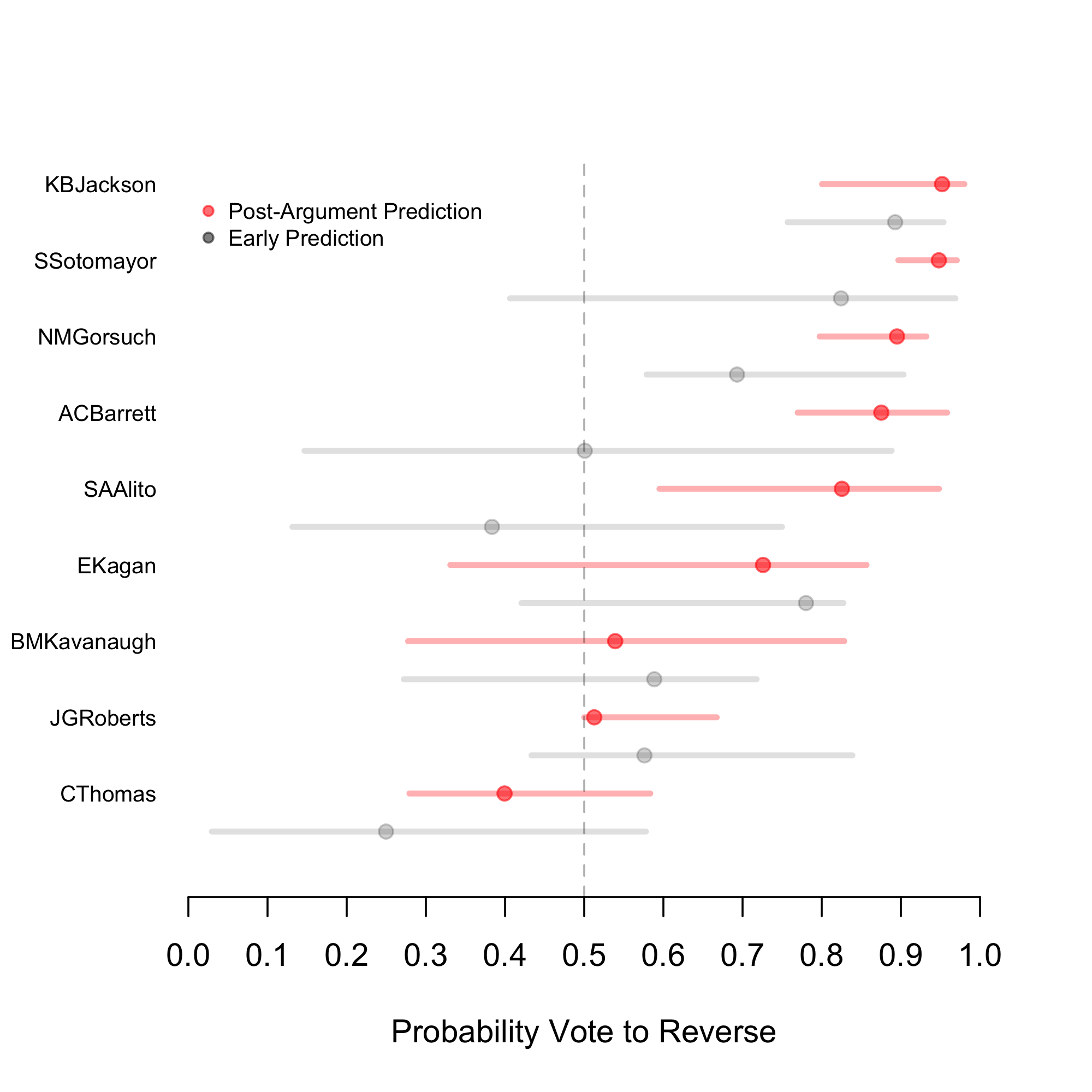
The model predicts reversal, suggesting a softer line on waiver. The model indicates Thomas as the most likely dissent.
vote predictions