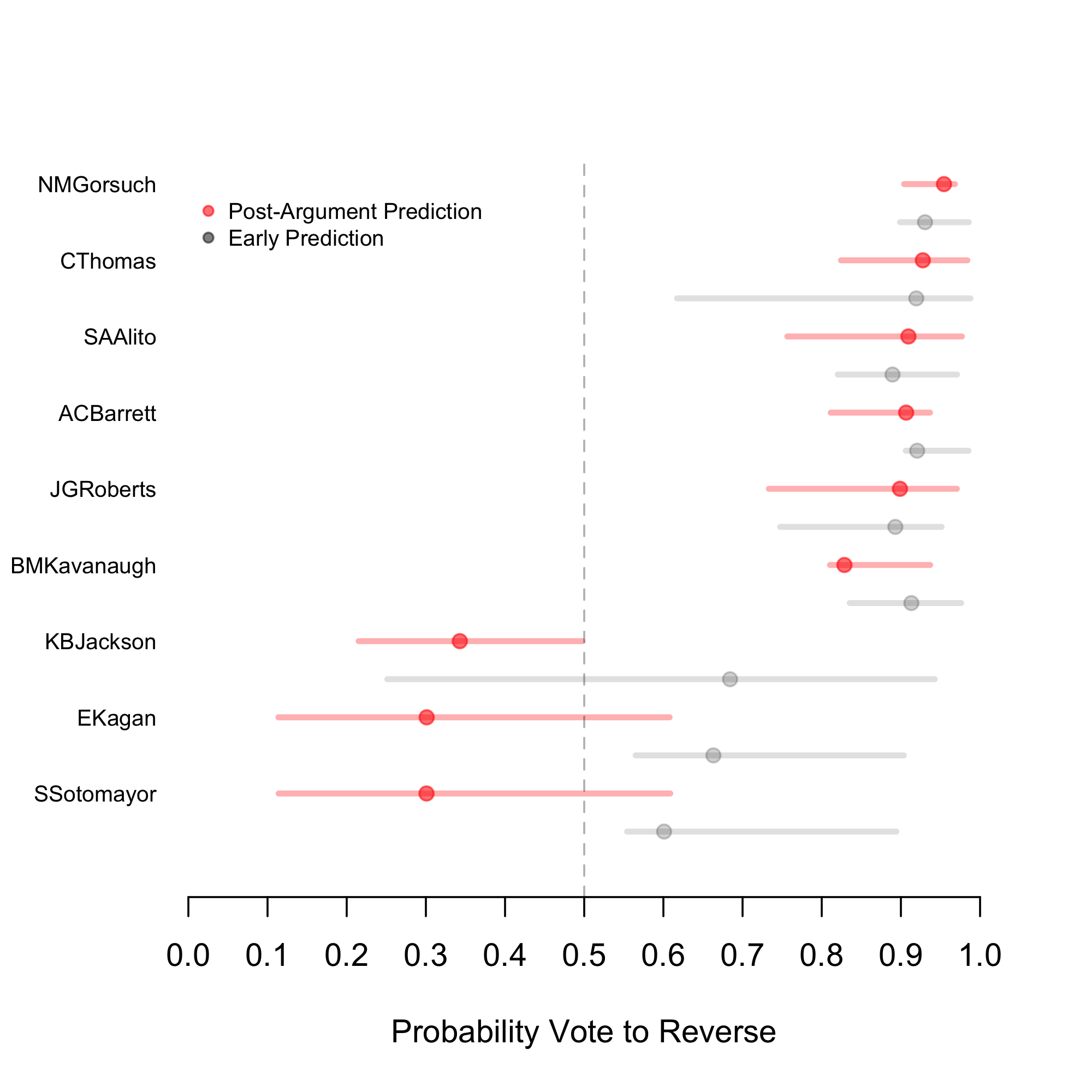
In the fourth blockbuster case of the term, the Court considers the constitutional viability of independent agencies, such as the Federal Trade Commission. I have deep interest in this case and will write more substantively on it later—for now, just a thumbnail and predictions.
For almost a century, the Constitution has been understood to allow Congress to set up agencies to insulate them from the president. The president can fire most officers for virtually any reason—because he does not like their policies, does not like the way they talk, does not like the color of their tie.
But the president needs cause to fire the heads of independent agencies. The FTC’s enabling act allows the president to fire commissioners only for “inefficiency, negligence of duty, or malfeasance in office.” President Roosevelt challenged that provision, and the Court upheld it in Humphrey’s Executor, a 1935 case that was part of a then-running conflict between the President and the Court over the New Deal. Humprey’s Executor is the foundational decision supporting the constitutional status of independent agencies.
In a full circle moment, the Court again considers the FTC’s removal provision. President Trump fired Rebecca Slaughter, an FTC commissioner he initially appointed and President Biden reappointed, earlier this year. Like Roosevelt, Trump fired the FTC commissioner without cause. The case tees up the same critical question of the constitutional status of independent agencies considered a century ago.
Many of the Court’s members, perhaps most notably Justice Roberts, have for years been angling for this case. Existing precedents, if followed, clearly say that Trump cannot fire slaughter without cause. And the DC Circuit, seeing that, held in her favor, allowing a District court order that she be re-instated to move forward. The Supreme Court stayed that decision through the emergency docket, and they agreed to hear the case this term.
Almost all observers expect Roberts and fellow travelers to administer the coup de grace to independent agencies. The model aligns with that expectation—there is a roughly 90 percent chance the Court reverses the DC Circuit. Predicted votes break down along conventional ideological lines.
vote predictions